Boston's housing market this fall: $900,000 homes, cooling condos and 7% mortgages
Greater Boston single-family prices hit a $900,000 median in September while condo sales fell nearly 10%. Here is what rates, inventory and rents mean for buyers, sellers and renters.
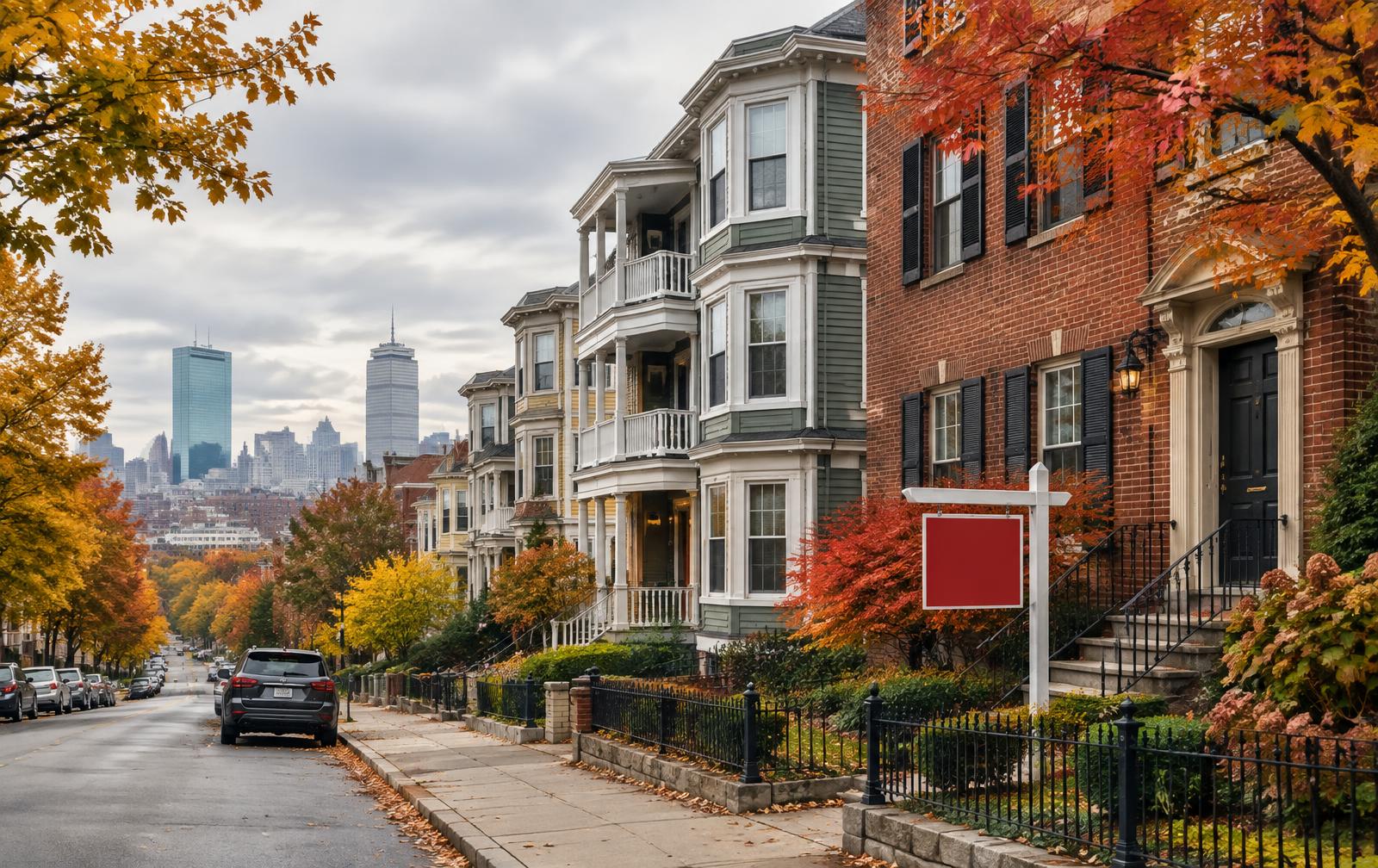
Greater Boston's housing market heading into November 2026 comes down to one tension: prices are still rising, but buyers are finally getting a little more time and choice, especially if they are shopping for a condo. Mortgage rates above 7% are the main reason the market feels slower than the price tags suggest.
Here is what the latest numbers show, and what they mean if you are buying, selling or renting in Boston and the surrounding towns.
The headline numbers (September 2026)
The most recent local data comes from the Greater Boston Association of Realtors' September 2026 market update, compiled by the Massachusetts Association of Realtors.
Single-family homes
- Median sale price: $900,000, up 2.5% from $878,000 a year earlier
- Closed sales: 798, essentially flat (down 0.6%)
- Homes for sale: 2,265, up 7.1%
- Months of supply: 2.7, up from 2.4
- Median days on market: 43, up from 41
- Sellers received 98.5% of their original list price, unchanged
- Year-to-date median: $965,000, up 1.6%
Condos
- Median sale price: $675,000, up 0.9%
- Closed sales: 599, down 9.8%
- Months of supply: 4.3, unchanged
- Median days on market: 57, up from 51
- Sellers received 96.3% of their original list price, down from 97.4%
In plain terms: single-family homes are still scarce and still expensive. Condos are where the market is cooling first.
A market "moving in two directions"
Statewide data tells the same story. The Massachusetts Association of Realtors reported that single-family sales rose 4.8% in September with a median of $670,000 (up 2.4%), while condo sales fell 6.4% and the condo median was flat at $525,000.
"This month's housing data points to a market moving in two directions," MAR president Kristen Keegan said, describing single-family homes as resilient and the condo market as "experiencing pullback."
One caution on statewide figures: different data sources count sales differently. Lamacchia Realty's report using Warren Group and MLS PIN data showed statewide single-family sales down year over year in September, along with pending sales down 7.9% and price reductions up 11.2%. The direction on prices agrees; the sales count depends on the source.
Mortgage rates are the big drag
The 30-year fixed rate averaged 7.24% in Freddie Mac's October 29, 2026 survey, down from 7.32% the week before but well above the 6.17% of a year ago. Freddie Mac's weekly archive shows rates climbing from about 6.7% in early September to 7.40% by mid-October.
That jump matters a lot at Boston prices. On a $900,000 single-family home with 20% down, a one-point increase in rate adds roughly $480 a month to principal and interest. That is why sales have stayed flat even as more homes come on the market.
More homes, more time, more price cuts
Inventory is improving from very low levels. Realtor.com-based data compiled by AgentCOS shows about 9,017 homes for sale in the Boston-Cambridge-Newton metro in September, up about 16% from a year earlier, with a median list price of about $784,778 (down 3.4%) and roughly 1 in 6 listings carrying a price cut.
Still, 2.7 months of supply for single-family homes is far below the roughly six months usually considered a balanced market. Buyers have more breathing room than in 2021 or 2022, but this is not a buyer's market.
Town by town, it varies a lot
Regional medians hide big local swings. Some examples from recent reporting:
- In Wayland, Patch reported the September median fell 7.5% to $971,000 on just six sales, a reminder that small towns can swing wildly month to month.
- A RE/MAX agent's September market report found homes in Ayer, Lynnfield and Wilmington selling at 103% of list or better, while buyers in Sherborn, Carlisle and Weston had the most negotiating room.
- A PH Realty Group analysis of 13 inner-suburb towns found Watertown among the hottest, with a median single-family price around $1.05 million and most homes selling at or over asking. It also found homes that needed price cuts sold 7% to 14% below their original asking price.
Those last two are brokerage reports, not official data, but they line up with the pattern: close-in, transit-friendly suburbs stay competitive, while high-end and outer towns give buyers more leverage.
What about renters?
Renting is not a cheap escape. Zumper's October 31, 2026 data puts Boston's median rent at $3,395 a month, up 4.5% from a year ago, with one-bedrooms around $2,935 and two-bedrooms around $3,500. Rents have eased about 2.3% from their late-summer peak, which is normal after the September 1 move-in rush.
What it means for you
Buyers: Fall is giving you more listings to compare and, for condos especially, more room to negotiate. Ask about seller concessions or rate buydowns rather than only price. If rates keep easing from their October high, competition could pick up again in spring.
Sellers: Pricing right from day one matters more than it has in years. Single-family homes are still selling near asking, but listings that start too high are sitting and taking cuts.
Condo owners: This is the softest part of the market. Expect longer listing times and offers below list.
Renters: Rents are still climbing year over year. Winter leases (which are less common in Boston) can sometimes come with better terms since demand drops after September.
The next update, October sales figures, is expected from the Massachusetts Association of Realtors in mid-November. We will update this story when it lands.
Cover: AI-generated illustration of a generic Greater Boston street, not a specific property or listing.