Boston's economy in 2026: a slower jobs engine, a biotech rebound and a housing squeeze
Boston's strengths are still real, but growth is uneven. The latest jobs, biotech and housing reports show why residents can feel squeezed even as investment returns.
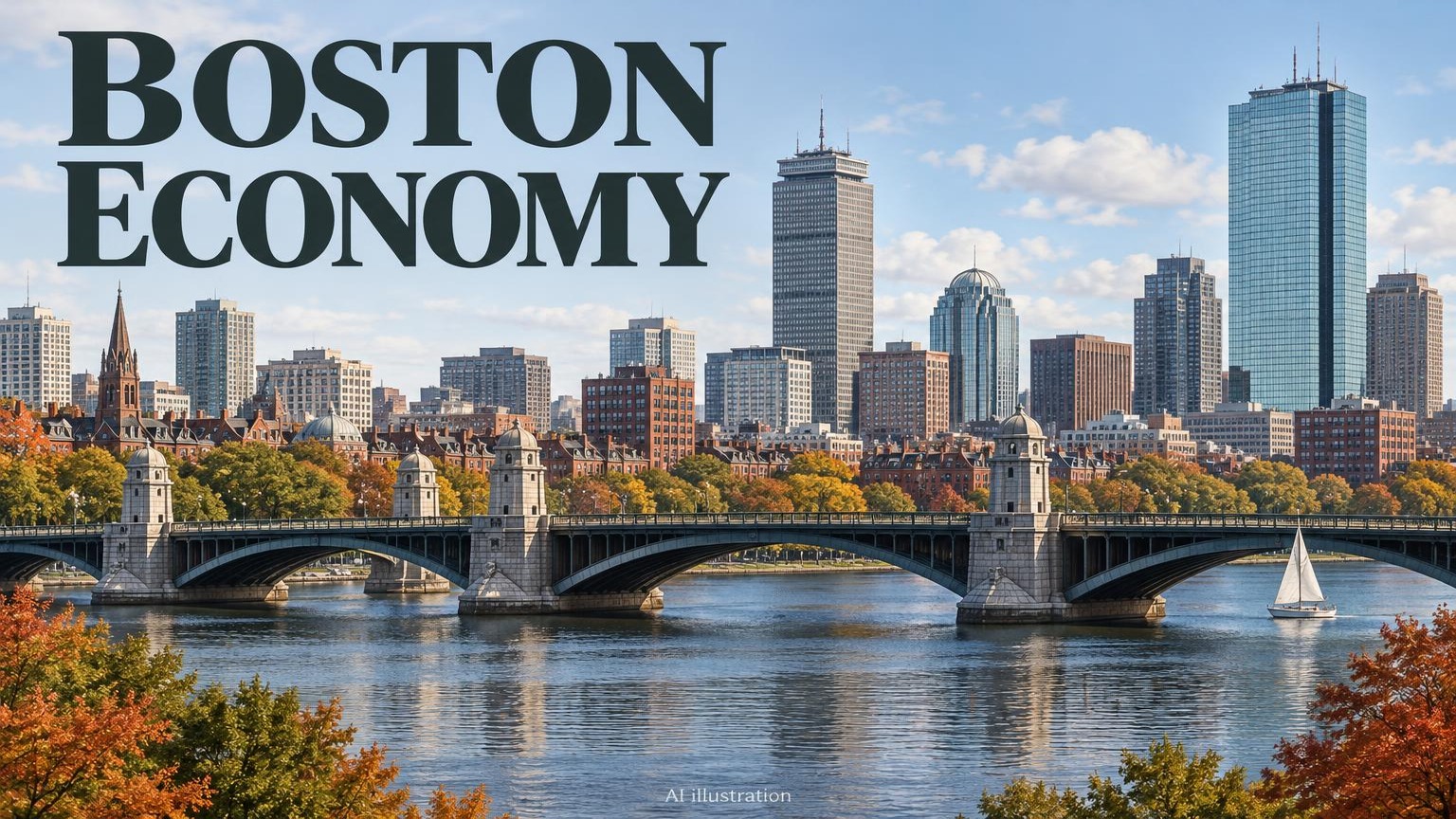
Boston still has world-class hospitals, universities, financial firms and a deep pool of scientific talent. But a strong economic identity does not automatically mean an easy job search or an affordable place to live.
The picture in November 2026 is mixed: Massachusetts is adding jobs, biotech investment has rebounded, and Greater Boston remains a major innovation hub. At the same time, employment growth has lost momentum, the life sciences workforce has contracted, and housing costs remain a serious barrier.
The economy in 30 seconds
- Jobs are growing, but unevenly. Massachusetts added a preliminary 3,500 payroll jobs in September, after a revised loss of 5,600 in August. The statewide unemployment rate was 4.3%.
- Biotech money and biotech hiring are telling different stories. Massachusetts biopharma companies raised $3.45 billion in venture capital in the first half of 2026, but the industry's employment fell 3.1% in 2025.
- Housing is still a major constraint. Greater Boston added 15,241 net new housing units between July 2025 and July 2026, down from 29,024 in the preceding year, according to reporting on the latest regional housing report card.
- The slowdown is not the same as an economic collapse. The Boston Fed documents weaker post-pandemic job growth, not a prediction that Boston's economic strengths have disappeared.
Sources: Massachusetts September jobs release, MassBio's 2026 snapshot, WBUR's housing report card coverage, and Boston Fed employment research.
Is Boston's job market getting worse?
There is evidence of a slower growth engine, but the latest verified statewide figures do not show jobs disappearing everywhere.
The state's October 16 release reported 16,300 more payroll jobs than in September 2025, including 13,000 private-sector jobs. September gains included financial activities, professional and business services, and trade, transportation and utilities. These are preliminary estimates and can be revised.
Those are Massachusetts figures, not a Boston city unemployment rate. Likewise, one month's gains cannot establish that every industry or neighborhood is doing well.
The bigger concern is the longer trend. In research published September 24, Federal Reserve Bank of Boston researchers Riley Sullivan and Jeffrey P. Thompson found that Massachusetts job growth now trails both the rest of New England and the nation.
Professional and business services, health care and social assistance, and related construction activity helped power the state's expansion during the 2010s. Since 2022, the researchers found, these engines have either stopped growing or expanded at a fraction of the national pace. Their brief is an analysis of employment trends, not an economic forecast.
Biotech is recovering financially, not yet across the workforce
The clearest example of Boston's split-screen economy may be life sciences.
MassBio's 2026 Industry Snapshot reports that Massachusetts-headquartered biopharma companies raised $3.45 billion in venture capital during the first half of 2026, up 25% from a year earlier. Eight Massachusetts companies went public during that period, matching the combined total for 2024 and 2025.
Yet statewide biopharma employment declined to 113,503 jobs in 2025, a 3.1% drop and the first annual decrease in more than two decades of MassBio tracking. Biomanufacturing moved in the other direction, adding 238 jobs.
These measurements cover different periods. A funding rebound in early 2026 does not prove that the 2025 employment losses have already been reversed. MassBio also represents the industry, so its investment figures should be read alongside its less favorable workforce findings.
For workers around Kendall Square and the wider region, the practical takeaway is that successful fundraising, acquisitions and public offerings are not interchangeable with broad hiring.
Housing is an economic problem, not just a real estate problem
Boston's affordability challenge reaches well beyond would-be homebuyers. It shapes where workers can live, how far they commute and whether employers can recruit people who do not already own property here.
In its November 12 summary of the 2026 Greater Boston Housing Report Card, WBUR reported 15,241 net new housing units across the region between July 2025 and July 2026, compared with 29,024 in the previous 12 months. The earlier surge partly reflected large apartment projects delayed during the pandemic finally opening, so the year-to-year drop needs that context.
The same report estimated that a household would need about $181,000 in annual income to buy an entry-level home in the region's lower-priced communities under its affordability assumptions, including spending no more than 30% of income on housing. That is a modeled scenario, not a universal mortgage qualification rule or the price of a typical Boston home.
The Boston Foundation's report examines supply, affordability and population pressures across Greater Boston, not just within city limits. GBH's November 10 reporting describes additional pressures from federal funding changes, immigration restrictions and the cost of financing construction.
Cheaper housing because more homes are built would be a healthier result than cheaper housing because jobs and residents leave.
What about AI, hospitals and universities?
Boston's concentration of professional services and research gives it opportunities to benefit from new technology, but also makes changes to office work and research funding important local issues.
It is too early to turn AI exposure into a reliable count of future Boston job losses. Automation can replace tasks, change job descriptions or support new hiring. A company layoff announcement alone does not show how many positions were eliminated because of AI.
Hospitals, universities and research institutions also remain central to the region's economy. However, the Boston Fed's findings are a warning against assuming that past growth in education, health care and knowledge-intensive work will continue automatically.
What residents should watch next
For jobseekers: Look at employer-specific openings and hiring conditions, not just industry headlines. Strong investment can coexist with selective hiring.
For renters and buyers: Watch new housing completions, asking rents and financing costs together. A cooling market can still be an unaffordable market.
For small businesses: Household purchasing power and the local customer base matter more directly than a successful biotech financing round. The outlook can vary sharply by neighborhood and type of business.
For the region: The key test is whether renewed investment translates into durable jobs, and whether housing production makes it possible for people to stay and take them.
Boston's economy is not simply booming or falling apart. It is a high-value economy with a weaker jobs engine and a stubborn affordability problem. Its next chapter depends on connecting investment, employment and a realistic cost of living.
Reporting checked November 12, 2026. Statewide, regional and industry statistics are labeled separately; the data cover different periods and are not a single Boston-city economic measure. Cover: AI-generated editorial illustration, not a documentary photograph.