Liberal Arts Colleges in New England: 14 Schools Worth a Closer Look
From Williams and Amherst to Bowdoin and Middlebury, a six-state guide to campus settings, academic differences and what families should check before applying.
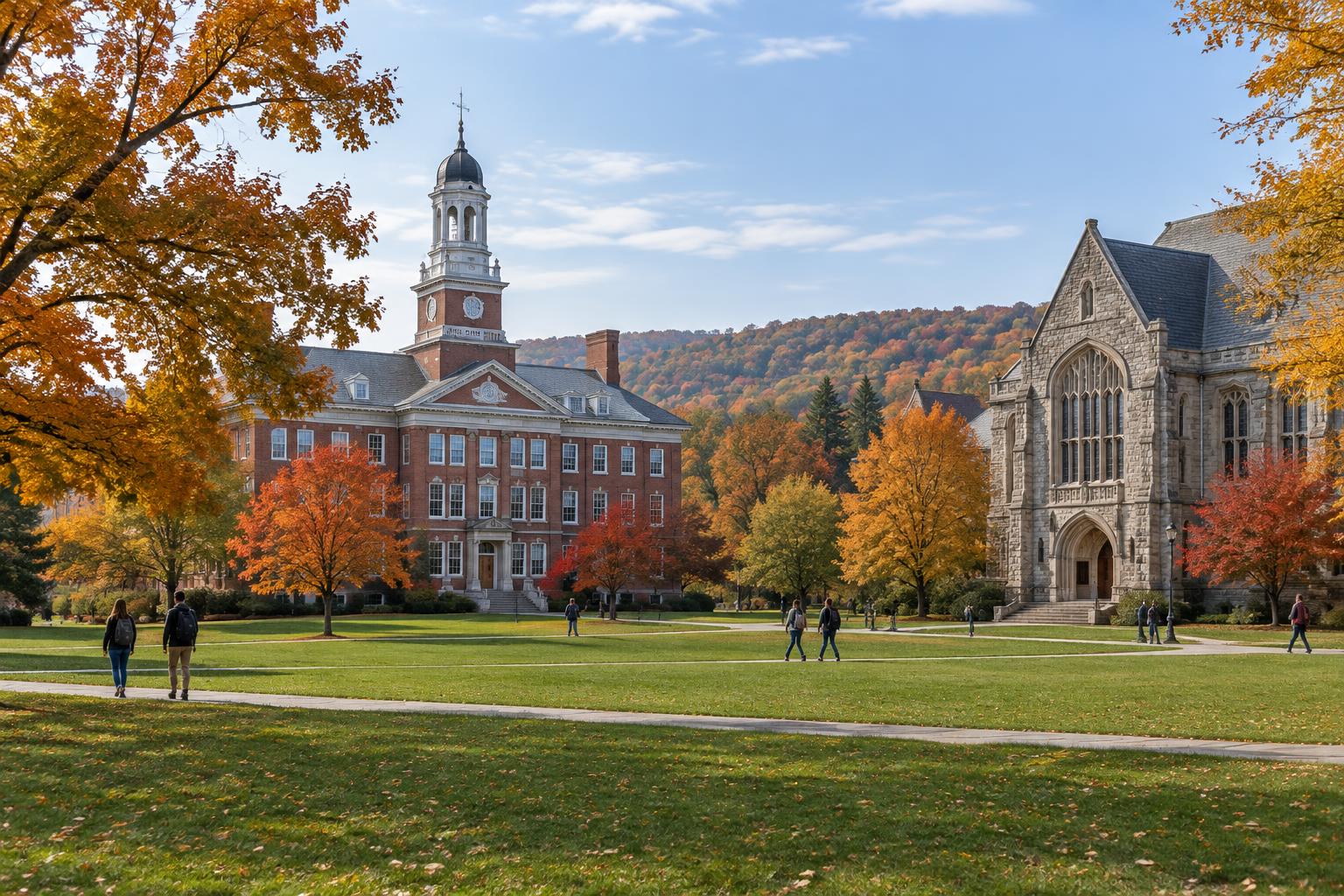
New England has no shortage of famous universities. But for students who want a smaller undergraduate community, close contact with professors and room to explore different subjects, the region's liberal arts colleges deserve their own college-search list.
Here are 14 schools to consider across all six states. This is a guide to different academic and campus experiences, not a numerical ranking or a promise that one college is right for every student.
The 30-second version
- For a small-town setting: Williams, Middlebury and Bennington are worth a look.
- For flexible academic choices: compare Amherst's open curriculum with Bennington's faculty-guided Plan.
- For Maine: Bowdoin, Bates and Colby offer three different home bases, in Brunswick, Lewiston and Waterville.
- For women's colleges: Wellesley, Smith and Mount Holyoke have distinct communities and admissions policies.
- For New Hampshire and Rhode Island: Saint Anselm and Providence College combine liberal arts foundations with professional programs.
What does “liberal arts” actually mean?
It does not mean only art classes, and it is not a political label. Liberal arts education spans humanities, sciences, mathematics, social sciences and the arts, usually combining a broad education with deeper study in a major.
The American Association of Colleges and Universities describes liberal education as an approach that develops broad knowledge alongside communication, analytical and problem-solving skills. The practical question is whether a school's actual majors, teaching style and career opportunities match what you want to do.
Massachusetts: six schools with different personalities
Williams College, Williamstown
Williams offers a Berkshires setting and a distinctive teaching format: its tutorials pair two students with a professor for intensive discussion and critique of their work. Its January Winter Study adds another kind of learning to the academic calendar.
Look closely if: you want a small-town campus and enjoy explaining, defending and revising your ideas. Visit before deciding whether the location feels peaceful or too removed from city life.
Amherst College, Amherst
Amherst's open curriculum has no core or distribution requirements. Students make choices with faculty guidance while still completing degree and major requirements. Its Five College Consortium membership adds access to courses at nearby institutions, subject to registration rules.
Look closely if: you want substantial freedom to explore subjects rather than a prescribed general-education checklist.
Wellesley College, Wellesley
Wellesley combines a women's-college environment with a suburban campus near Boston. Its admissions FAQ places the campus about 12 miles from the city. Being near Boston is not the same as living downtown, so investigate actual travel time and transportation.
Look closely if: you want a residential campus with access to a larger metropolitan area. Read Wellesley's own gender policy rather than assuming every women's college has the same eligibility rules.
Smith College, Northampton
Smith offers a women's-college community in Northampton and participation in the Five College Consortium. Its Ada Comstock Scholars program provides a route for eligible nontraditional undergraduates, with its own application requirements.
Look closely if: the college-town environment appeals to you, or you are returning to education and want to examine a dedicated admissions pathway. Check Smith's undergraduate admission policy directly.
Mount Holyoke College, South Hadley
Mount Holyoke is another Five College member, with a different home campus and community from Amherst or Smith. Its inclusive admission policy describes a gender-diverse women's college welcoming female, transgender and nonbinary students.
Look closely if: you want this kind of community plus the option to explore courses through the consortium. Confirm current eligibility with admissions if the policy does not clearly address your circumstances.
Wheaton College, Norton
Wheaton adds a Massachusetts liberal arts option outside the western part of the state and outside Boston itself. It is in Norton, Massachusetts, not Rhode Island and not the similarly named Wheaton College in Illinois.
Look closely if: you want to compare a smaller campus in southeastern Massachusetts with the region's better-known college towns.
Maine: three campuses, three home bases
Bowdoin College, Brunswick
Bowdoin describes a residential undergraduate liberal arts community in Brunswick. Its academic offerings make it worth considering for more than a single subject or career track.
Look closely if: a Maine town setting appeals to you. Compare the departments you would actually use, not simply the college's reputation.
Bates College, Lewiston
Bates emphasizes interdisciplinary work, faculty-supported research and community engagement. Its academic calendar includes a spring Short Term focused on one course, rather than the usual multi-course semester load.
Look closely if: you like the idea of concentrated study and want to explore how a college connects with its surrounding community.
Colby College, Waterville
Colby's course catalogue describes academic resources including DavisConnects, the Colby Museum of Art and its Island Campus. Those offerings are reasons to investigate particular programs, not guarantees that every student will participate in every opportunity.
Look closely if: museums, research or learning beyond the main campus could be part of your undergraduate plans.
Vermont: two approaches to a smaller college experience
Middlebury College, Middlebury
Middlebury is an undergraduate liberal arts college within an institution that also offers language-school and graduate programs. Applicants should distinguish the undergraduate college from those separate programs when comparing opportunities.
Look closely if: you want a Vermont college-town setting. Review the current undergraduate course offerings and visit during the school year, not only on a summer trip.
Bennington College, Bennington
Bennington's Plan lets students develop a course of study with faculty guidance. Its required Field Work Term adds work outside the classroom to that academic approach.
Look closely if: you want to help shape your education and connect it with practical experience. Ask how advising keeps that freedom focused and how students arrange field work.
Connecticut: flexible study and connected learning
Wesleyan University, Middletown
Despite the university name, Wesleyan belongs in a conversation about undergraduate liberal arts education. It also has graduate programs, so it is not identical in structure to every undergraduate-focused college on this list.
Look closely if: you want to compare a liberal arts university with smaller colleges rather than limiting your search by the word on the sign.
Connecticut College, New London
Connecticut College's Connections program links courses across disciplines with learning in and beyond the classroom. First-year seminars and integrative pathways are part of its approach.
Look closely if: you want general education to connect different interests rather than feel like a collection of unrelated requirements.
New Hampshire and Rhode Island: a broader program mix
Saint Anselm College, Manchester, New Hampshire
Saint Anselm combines a liberal arts foundation with professional fields. Its Catholic and Benedictine identity is part of the institution's character, not a detail to overlook when assessing fit.
Look closely if: you want a smaller college experience while comparing liberal arts and career-focused programs. Ask how the core curriculum fits your intended major.
Providence College, Providence, Rhode Island
Providence College offers liberal arts study alongside professional programs. It is a broader comparison option, rather than an exact structural match for every traditional liberal arts college above.
Look closely if: you want a Providence setting and a mix of academic pathways. Compare your department, core requirements and the surrounding neighborhood in person.
What families should check before applying
Start with net price, not the published price. Use each school's official net price calculator and ask its financial-aid office about your circumstances. “Meets full demonstrated need” refers to the college's calculation of need, which may differ from what your family believes it can afford.
Do not assume financial-aid policies are interchangeable. Need-blind admissions, no-loan awards and merit scholarships mean different things. Eligibility can vary by citizenship or applicant category. Read current terms and deadlines.
Take binding Early Decision seriously. Read the agreement and ask about financial-aid provisions before committing. A college's prestige should not replace an affordability plan.
Check the academic details. Confirm that the major exists, how easily students enter it, who teaches introductory courses and which internships or research opportunities require separate applications.
Visit the place, not just the admissions presentation. Walk into town, test transportation and ask current students about weekends and winter. A beautiful campus can still be the wrong everyday environment for you.
The bottom line
The strongest college list is not necessarily the most famous one. Build a shortlist around academic fit, affordability and the kind of place where you can see yourself spending four years. New England offers enough variety that those priorities can lead to very different choices.
Reporting checked October 24, 2026. This is a selective guide, not a complete directory or ranked admissions recommendation. Sources are linked throughout. Admissions, programs and financial-aid policies can change.
Cover: AI-generated illustration of a fictional New England college campus, not a photograph of any school listed.