Maura Healey vs. Mike Minogue: Where They Stand in Massachusetts' Governor's Race
Healey is defending her record. Minogue is promising a reset. Here is how they differ on housing, taxes, energy, immigration, and accountability ahead of the November 3 election.
The 30-second version: Democratic Gov. Maura Healey is running for a second term against Republican Mike Minogue, a former medical-device executive and Army veteran. Healey points to enacted tax relief and housing investments. Minogue argues Massachusetts needs lower costs, tighter oversight, and a different approach to energy and immigration. Their disagreement is not just about personalities. It is about whether the state needs continuity or a major policy reset.
Reporting current as of October 24, 2026. This is a reported comparison, not an endorsement.
Who are the candidates?
Healey was elected governor in 2022 after serving as Massachusetts attorney general. Minogue is a first-time candidate and the former chief executive of Danvers-based Abiomed. He won the September 1 Republican primary against Brian Shortsleeve and is now the party's general-election nominee. The election is Tuesday, November 3. See GBH's primary coverage and Boston.com's final-debate report.
This comparison focuses on the two major-party nominees. They are not the entire field: independent Andrea James is also running, as WBUR's debate coverage notes.
Taxes: an existing record versus new promises
Healey signed a tax-relief package in October 2023 that expanded the Child and Family Tax Credit, increased the rental deduction and senior circuit breaker credit, and changed estate and short-term capital-gains taxes. The administration described the package as $1 billion in relief. That is the package's overall scale, not a payment every household receives. State announcement.
Minogue's blueprint promises tax cuts, spending restraint, and a gas-tax holiday when gasoline prices exceed $4 per gallon. It also calls for working toward eliminating the state gas tax. Healey has proposed temporary gas-tax relief too, so this is not a simple divide between one candidate supporting relief and the other opposing it. As of the October 15 debate, WBUR reported that the Legislature had not acted on Healey's proposal. Tax changes generally need legislative approval, and a campaign pledge is not an enacted cut. Minogue blueprint reporting and debate coverage.
Housing: funding and policy changes versus faster permitting
Healey's central housing accomplishment is the 2024 Affordable Homes Act. It authorized $5.16 billion over five years and included measures allowing accessory dwelling units, modernizing public housing, supporting homebuyers, and converting commercial space into housing. An authorization is permission to spend, not proof that every dollar has been spent or that promised homes are already occupied. Official law summary.
Minogue emphasizes speed and local incentives. His blueprint proposes giving municipalities a greater share of tax dollars if they eliminate stretch building codes and cut single-family permitting times to 45 days or less. Those codes include additional energy-efficiency requirements. The proposal puts faster construction and municipal finances at the center of his approach, but the promised fiscal and permitting changes are not established results. WBUR's blueprint analysis.
The useful question for voters: How many homes would each approach actually deliver, how soon, and at prices ordinary households can afford? Neither a funding headline nor a shorter permitting target answers that alone.
Energy: the biggest policy divide
Minogue wants to cancel Massachusetts' statutory commitment to net-zero emissions by 2050, cut state-mandated utility fees, and pursue lower-cost energy. Healey supports clean-energy development and has defended solar, wind, geothermal, and hydroelectric projects. Repealing the state's climate framework would require legislative changes, not simply a governor's announcement. Blueprint coverage.
The natural-gas debate needs context. Minogue has criticized Healey for opposing pipeline expansion while attorney general. Healey says she opposed making ratepayers finance a developer's pipeline. PolitiFact reported that she has since asked the Trump administration to accelerate natural-gas expansion into Massachusetts. Describing her current position as opposition to all gas expansion misses that change. PolitiFact's October 15 fact-check.
Immigration and Trump
Healey has sharply criticized federal immigration enforcement and has repeatedly connected Minogue to President Donald Trump. Minogue says he would cooperate with federal immigration authorities to remove violent criminals and drug dealers, end what his blueprint calls sanctuary-state policies, and lower the temperature around enforcement. His blueprint also recognizes immigrants' economic contributions. These are political positions, not proof that every proposed change can be implemented without legal constraints. WBUR's debate report and blueprint analysis.
Abortion: a meaningful difference
Healey supports abortion access. Minogue describes himself as pro-life, rooted in his Catholic faith, while saying he would follow Massachusetts law and separate his personal beliefs from his duties as governor. Voters should distinguish that pledge to uphold existing law from agreement with Healey's position on abortion rights. Their exchange was one of the sharpest moments in the final debate. WBUR's account.
Accountability: what should voters examine?
Minogue proposes outside audits, a spending dashboard, and more competitive contracting. WBUR notes that outside auditors already review state finances annually, while a separate voter-approved legislative audit has faced resistance. The question is what his proposals would add, what authority they would require, and whether they would produce measurable savings. Blueprint analysis.
Healey faces scrutiny over her administration's handling of alleged misconduct, including cases involving a former aide and a State Police barracks. Minogue attacked her response in the final debate; Healey defended the actions taken and her choice of outside leadership for the State Police. Allegations and criminal charges are not findings of guilt. The political issue is the quality and speed of oversight, not treating unresolved cases as proven facts. GBH and State House News Service's debate report.
The bottom line
Healey has a record voters can evaluate, including real tax and housing legislation, alongside unresolved affordability problems and questions about oversight. Minogue offers a sharper break with current policy, particularly on climate requirements, taxes, and immigration, but his proposals still need to be judged for cost, legality, and feasibility.
The best comparison is not which candidate has the stronger slogan. It is who offers the more credible route to lower costs, more housing, reliable services, and accountable government.
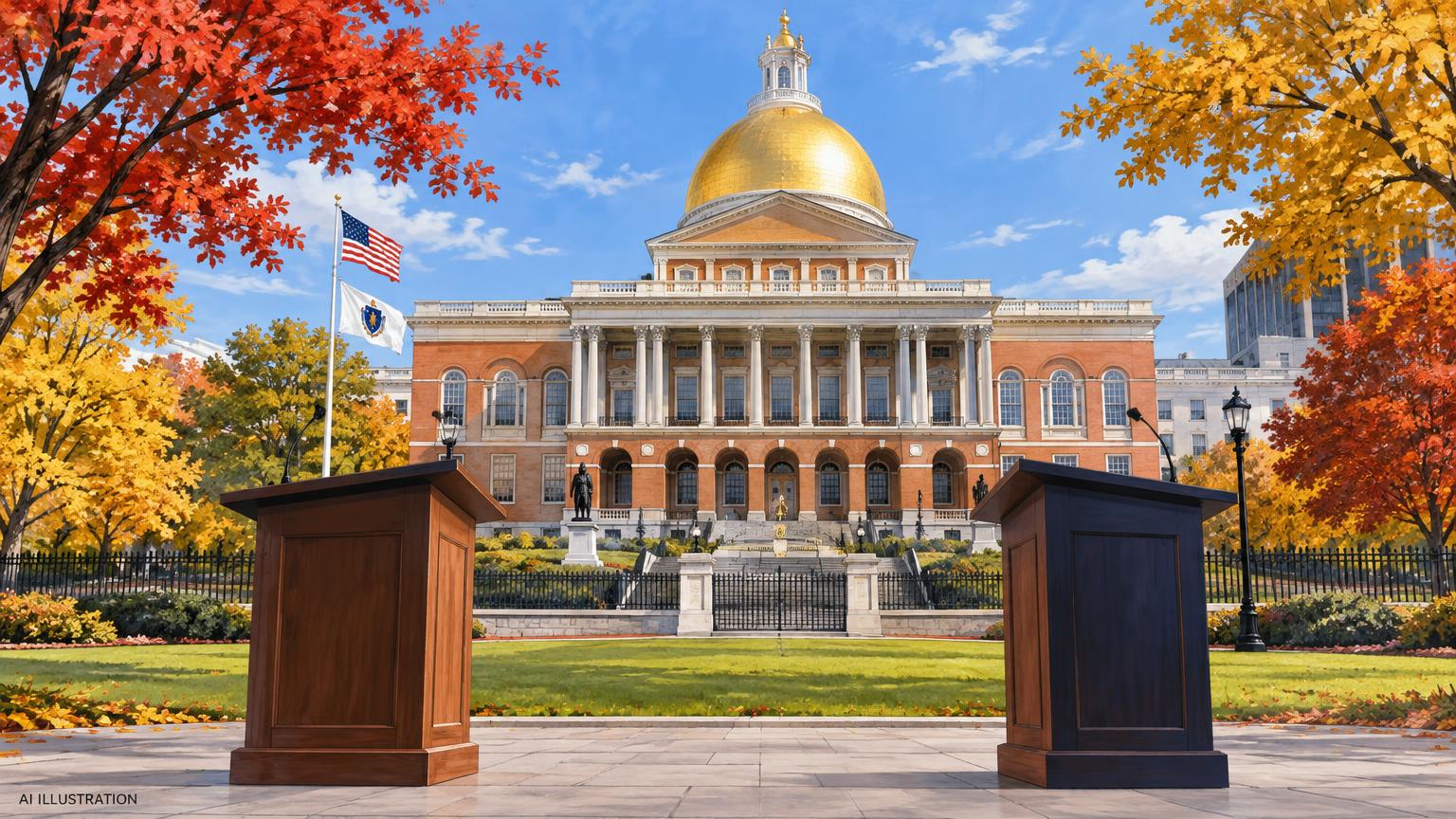
Cover: AI-generated editorial illustration of the Massachusetts State House. It does not depict the candidates or an actual debate.