Michelle Wu is exploring congestion pricing for Boston. No toll plan is on the table yet.
Boston officials are planning a New York fact-finding trip as Wu weighs traffic relief and transit funding. A Boston charging zone, price and start date have not been announced.
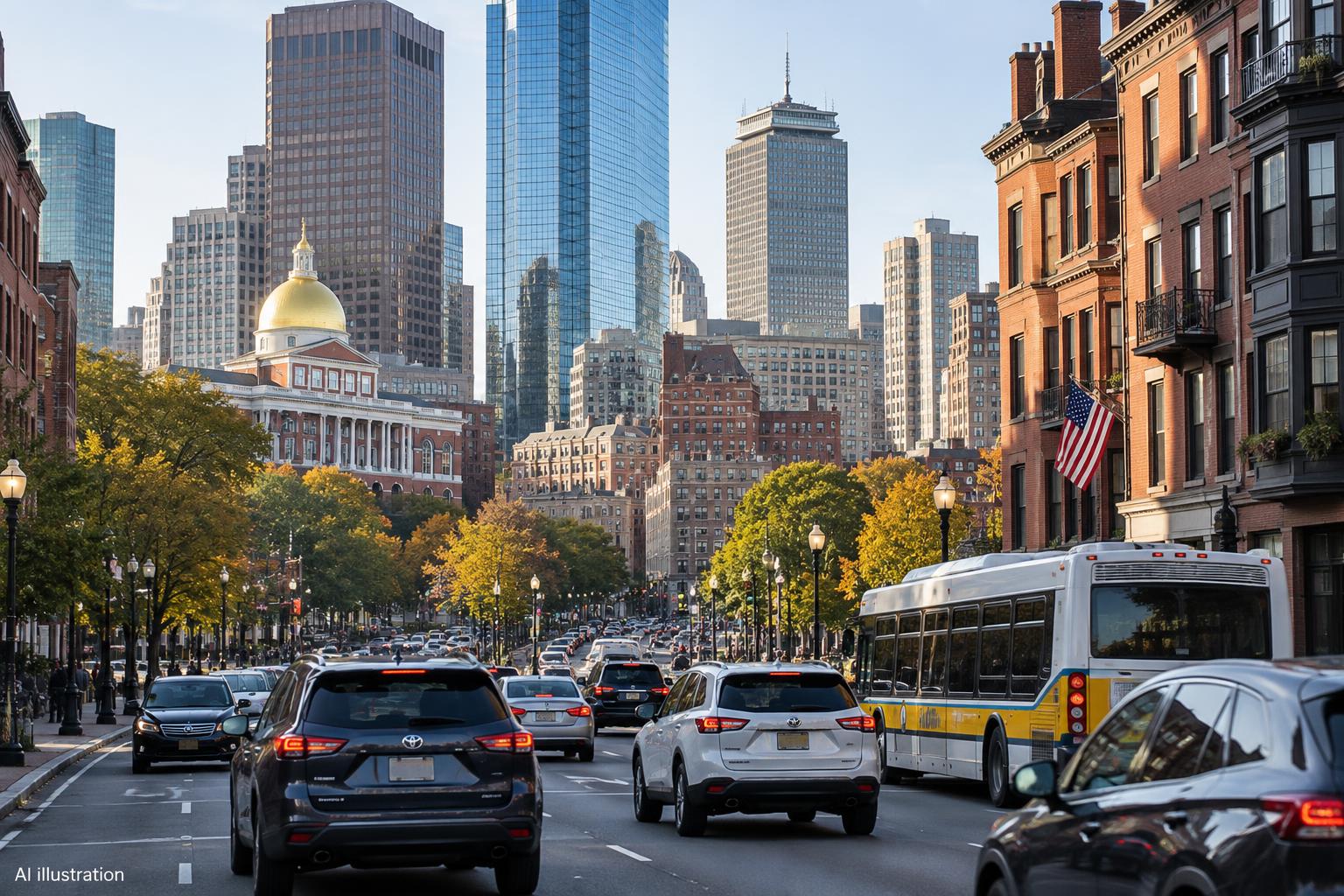
Cover: AI-generated editorial illustration of Boston traffic, not a photograph of a proposed tolling system.
Boston Mayor Michelle Wu is taking a closer look at congestion pricing, but drivers are not facing an announced new Boston toll. Her administration is studying New York City's approach and organizing a visit to see how it works.
The distinction matters: exploring a charge is not the same as approving one.
The quick version
- Wu's team has been talking with New York officials about congestion pricing.
- A delegation of city and state officials, advocates and business leaders is expected to visit New York in the coming weeks.
- No specific Boston charging plan is on the table, Wu said.
- A price, charging area, exemptions and launch date have not been announced in the reporting reviewed for this story.
What Wu actually said
Speaking to the MBTA Advisory Board on October 20, Wu described New York's congestion pricing as a source of money for transit improvements and said her team had been learning about the program, according to State House News Service reporting carried by NBC Boston.
In an October 21 report, WCVB quoted Wu saying: "There's not a specific plan on the table. It's really just learning and understanding what the real before and after has been for New York."
WCVB reported that the planned trip would include public officials, advocates and business leaders. Wu said the delegation would leave in a couple of weeks. That is a learning visit, not a Boston rollout date.
What congestion pricing would mean
Congestion pricing generally charges drivers to enter a designated busy area. The goals can include reducing traffic, improving air quality and raising money for transportation.
New York's system is the example Boston is examining. WCVB reported that passenger cars entering its lower-Manhattan charging zone pay $9 during peak periods. That is a New York rate, not a proposed Boston price.
The same report cited the Metropolitan Transportation Authority's first-year figures of roughly $550 million in revenue and an 11 percent reduction in traffic. Those are reported results from New York, not projections for Boston.
Why the idea is getting attention now
Boston's 2030 Climate Action Plan, released in April, sets out the city's broader effort to reduce emissions. WCVB reported that congestion pricing was included among measures to study.
Wu's latest comments also came during a discussion about paying for transportation. A charging program could put traffic management and transit funding in the same conversation, but Boston has not announced how any future proceeds would be allocated.
The questions commuters should watch
The practical details remain open: which streets would form a charging zone, how much drivers would pay, when charges would apply and whether residents, low-income workers or particular vehicles would receive exemptions.
Another central question is what alternatives would be available to people who cannot easily replace a car trip with a train or bus ride. Those choices would matter to commuters coming from outside Boston as well as city residents.
There is also a state-level hurdle. WCVB reports that any congestion pricing plan would require approval from the Massachusetts Legislature. Wu's interest alone does not authorize a toll.
Bottom line: Boston is studying congestion pricing. There is no announced Boston fee, approved charging zone or start date in the reporting reviewed as of October 23, 2026.